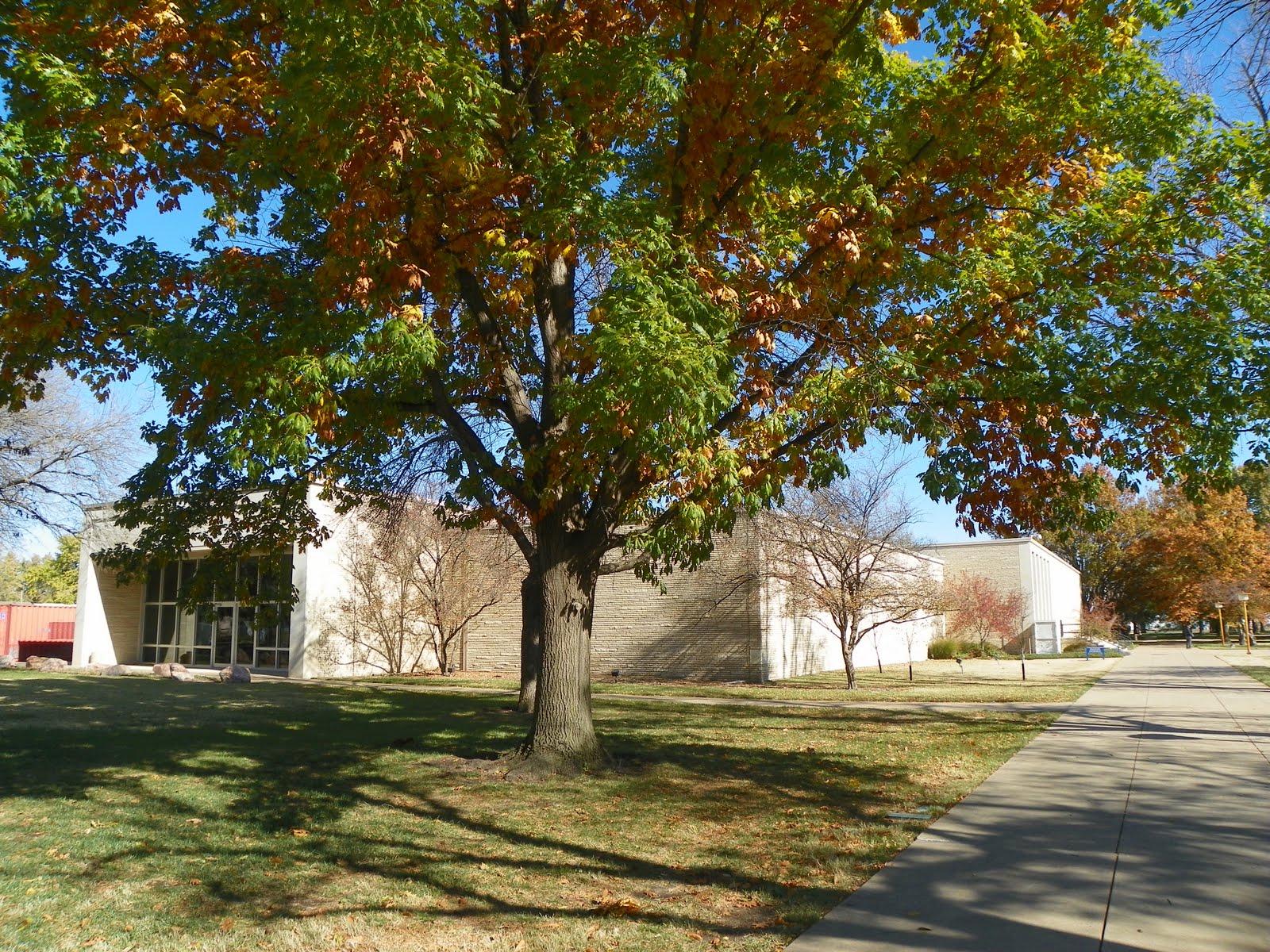
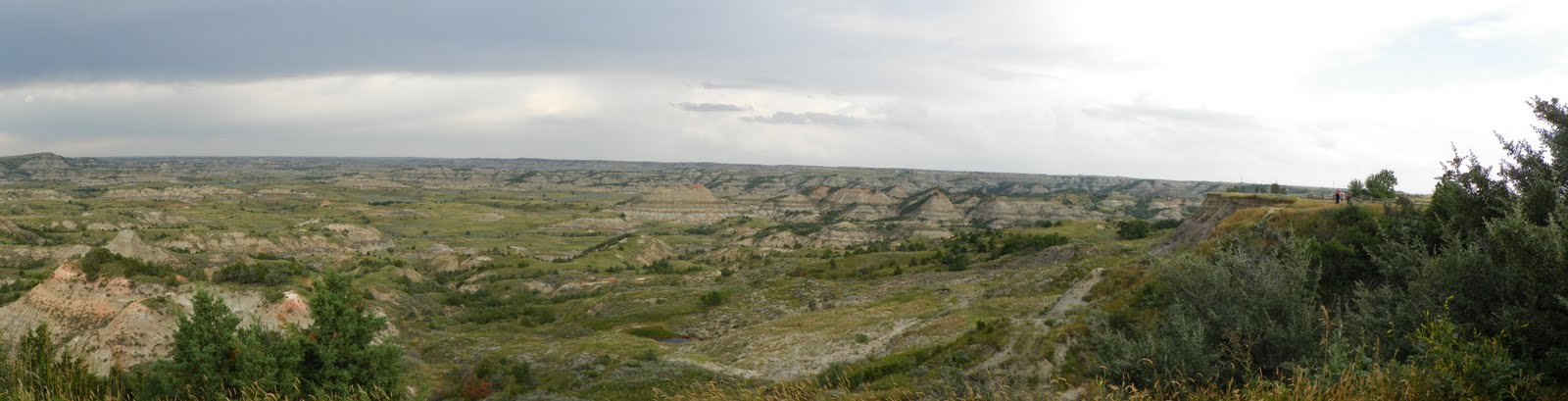
Before doing what I had promised at the end of my last blog entry I will give you a short quiz, just one question. I will then give you the answer at the beginning of my next blog entry. Yes, you will have to wait, but maybe not very long. Here is the question: What national park is the most visited park in the world? A picture to wet your whistle and give you a hint.
I have some more pictures from my visit to the Eisenhower Museum in Abilene, Kansas.
Perhaps less said the better. Painting at the entrance.
Eisenhower was responsible for the creation of the interstate highway system. He vividly remember that his unit around the time of WWI traveled coast to coast and it took them a full month to move the distance. He thought that to not be good for the countries defense but also it would enhance commerce.
The museum had a beautiful display of White House dinner ware from various Presidents. My estimate is that Eisenhower's were the best looking.
During his Presidency he was showered with various gifts from other rulers and statesmen. Here are a couple of examples of such gifts, most are archived for future displays.
Did you know that Ike took up oil painting in his 50s? So, my own imaginations to do the same may not be so out of line...
The glare of the glass protecting the painting diminishes its beauty. It is said that Ike would destroy two out of every three paintings, but they were so well liked by others that the White House used the paintings on their postcards.
I will select one more photo from the Eisenhower Museum stop, a gift that now would be abhorred and is illegal, but as it is, it is a thing of beauty given in the early 1950s from a ruler in Africa to the President. Times have changed.
A carved elephant tusk probably three feet in length
As I move onto Truman, I wanted to mention something that I have learned, not so much from the museum, which is apolitical in its public offering to all Americans, but which historians acknowledge. Eisenhower disdained Truman and his policies, it was part of the reason he chose to enter political life. He disagreed with Truman cutting the military, although he, himself, did so for the first years of his Presidency. He did not want the federal government to be involved in medical care whereas Truman actively advocated for national health care. Ike disdained the federal government borrowing money, but he, like Truman, for the first years of his Presidency ran in deficit spending. Where is the stairway and where are its shadows?
I enjoyed the Truman museum in Independence, Missouri, even more than the Eisenhower museum. What an unlikely President, and yet this almost blind high school graduate, a failure in business, a man, like Eisenhower, born to humble and yet honorable parents, from the heartland of America in an obscure town, in full character lived life to the fullest and took opportunities as they came and made the most of it. Ike was raised in a Republican family, Truman a democrat. From county commissioner, to Senator, to Vice President, to President upon the death of Roosevelt. To trace a life like his is to gain an appreciation for what can be, some by chance and much by character and hard work, seizing opportunity and allowing that opportunity to stretch and grow a person. Likely, of all the Presidents who have served, none have been more challenged and had to make large decisions in the first few weeks of his term. This is what he said shortly after he became President and was faced with the weighty decisions of leading the USA still at war.
The museum entrance and the mural greeting visitors
A picture taken with Harry Truman and my cousin-in-law "Pinky" Cunningham. I run in good company.
Other photos of our visit to the museum and to Harry's home. The first picture is that of an exact replica of the oval office at the time he served as President. Gee, now I don't need to stop by the White House on our trip!!!
For the next two pictures, I would suggest you enlarge them and read. He never forgot the impact of the decisions he made.
Off season has its advantages. Louise, Laura, Pinky and I were treated to an exclusive tour by the park ranger of the inside of the Truman residence. Cameras not allowed. While in the dining room, I had an imaginary short and quiet conversation with Harry just for fun. All the furnishing are original and even his famous walking coat was on the coat hook by the backside entry. The home was beautiful inside with the exception of the kitchen, a simple and plain fare. His reading room was quite small but full of bookshelves, his friends for many a quiet evening. They had one TV set but by its placement in the parlor room, probably never used. He didn't like the new contraption and didn't think it would amount to much.
What a treat, Pinky took me down to Grandview, to the farm where Harry labored with his mother and sister for eleven years as a young man. The comparatively large farm of over 600 acres or about 454 footballs field in size, but only 10 acres survives untouch, The rest is all built up with shopping center and residential properties even a freeway intersects the original property.
Well, I have spent most of my evening composing this blog, but in the previous entry I promised a story or two about citizen Harry Truman, as told to me by an older local who actually met President Truman in the local barber shop. As a youth this man would walk his dog around the town of Independence and he stopped by the barber shop that given morning. His dog promptly lay down under the one barber chair not occupied. Who soon enter the barber shop for a trim? None other than Harry coming off of one of his famous walks. He proceeded to the empty chair only to be growled at by the dog. He responded by delaring, "I didn't know that dogs could be Republicans!" Another story coming from the same gentleman was the time when he got sick and his dad took him to the local doctor, brought him to the door and told him to go in and wait. No empty chairs were to be had and one gentleman offered the use of his lap. Sitting on his lap and looking up he realized that he was sitting as a guest of Harry Truman. One more story from that old story teller was of the time that Truman, who liked a good practical joke, offered to deliver mail to someone of the mail deliverer's route, only to surprise the recipients by who knocked on their doors! And to close this long blog, one more picture which also shows the sense of humor he had. The handwritten note on the upper right corner of the invitation to his own Inaugural says "Weather permitting I hope to be present HST"
Next entry will be the answer to the question, the location of which we will be departing from tomorrow. I then want to share with you about my visit to the World War I museum in Kansas City. It is a world class museum much like the Smithsonian museums in Washington, D.C. It is the only major museum in the whole of the U.S.A. commemorating the sacrifices of over 600,000 Americans.
Sunday, December 11, 2011
Friday, December 2, 2011
Political Allegory?
One of the personal joys of authoring a blog is that the writer decides when diverge off the normal route of thought and slip something in, or maybe share something from a very personal perspective. This is one of those times. Art unintended, a meeting of practical function with daylight and time of day, produced this play on the eyes. This picture is of a water tank next to a truck stop a stone's throw from I-70 in the town of Limon, Colorado taken in the afternoon of November 1st. Where do the steps end and shadows begin, or, which are the steps and what are its shadows?
From Dictionary.com:
al·le·go·ry
[al-uh-gawr-ee, -gohr-ee]
1. a representation of an abstract or spiritual meaning through concrete or material forms; figurative treatment of one subject under the guise of another.
Originally I had no intention of thinking of an allegory related to such concrete representations found in the water tower, its steps upward and its casting of shadows, but perhaps there is something to be said concerning two different presidents, the 33rd and the 34th, Truman and Eisenhower, both of which I have given much time to studying their lives, decisions and actions, personal and political. Part of that study now involves visiting their presidential museums and libraries.
Our travel course east initially took us along I-70 and our first planned destination stop was Abilene, Kansas, the home town of Dwight D. Eisenhower, our 34th President (R). Eisenhower became president the year I was born (1953) and he left office shortly after the year I first realized there was a presidential race, that of Nixon and Kennedy (age 6 1/2).
Dad and I pulled into Abilene late in the afternoon of November 2nd only to find its only RV park had closed for the season! So much for lack of advance planning and deciding to travel spontaneously. It does have its drawbacks at times. The nearest RV park was several miles outside of town heading eastward. Just prior to nightfall we arrived at the park and quickly set up camp in the freezing wind, dad was inside trying to get warm and I was outside wishing I was. Age has its privilege. The next morning a decision needed to be made; do we retrace our route hauling the travel trailer behind us (the truck transmission was not working well) or just bypass our first presidential museum and charge ahead of the upcoming winter storm. Dad was ambivalent and acquiesced to my judgement. I chose to go back to Abilene and spend the better part of a day at the site. The campus was quite impressive, or should I say expansive, with a separate building for the library archives, another one for the museum highlighting "Ike's" life of service to a country he dearly loved, the tremendous leadership he provided during World War II, head of the infant organization called NATO, and his work on the development of war-torn Europe during the height of communist Soviet power which threatened western Europe. Also on the campus there was a beautiful chapel where the President and his wife are buried. The central building in the complex was the home in which he was raised with his several brothers, original to the core, as if his parents had just stepped out to go to the store.
Eisenhower was a man whose life was the embodiment of DUTY to country. His was a life started in a small unassuming mid-west plains town, raised in a devout Jehovah's Witness family, although he himself was not very religious, a man who by his mid-fifties was the most loved and most powerful man in the western world, bar none. Eisenhower was a man who, for most of his life, avoided partisan politics and for years denied daily any interest in becoming president, but DUTY finally called him for he felt compelled to run as a point of service to a world in need. Really.
The stop to the visitor's center netted me my next book to read titled, Eisenhower, Soldier and President, by Stephen E. Ambrose. (Last year I read an excellent book on Truman by David McCullough) I am about half way through the 570 page book and I am enjoying the read in quiet morning and evening hours.
MUSEUM
PRESIDENTIAL LIBRARY
Three pictures, one of my father in front of the graves and two of the tablets in the chapel surrounding those graves, words of Eisenhower
Signing off now but will return to finish Abilene and go to Independence Missouri and Mr. Truman, citizen. I also I have a story or two to tell about a man I met who met Truman at the barber shop.
From Dictionary.com:
al·le·go·ry
[al-uh-gawr-ee, -gohr-ee]
1. a representation of an abstract or spiritual meaning through concrete or material forms; figurative treatment of one subject under the guise of another.
Originally I had no intention of thinking of an allegory related to such concrete representations found in the water tower, its steps upward and its casting of shadows, but perhaps there is something to be said concerning two different presidents, the 33rd and the 34th, Truman and Eisenhower, both of which I have given much time to studying their lives, decisions and actions, personal and political. Part of that study now involves visiting their presidential museums and libraries.
Our travel course east initially took us along I-70 and our first planned destination stop was Abilene, Kansas, the home town of Dwight D. Eisenhower, our 34th President (R). Eisenhower became president the year I was born (1953) and he left office shortly after the year I first realized there was a presidential race, that of Nixon and Kennedy (age 6 1/2).
Dad and I pulled into Abilene late in the afternoon of November 2nd only to find its only RV park had closed for the season! So much for lack of advance planning and deciding to travel spontaneously. It does have its drawbacks at times. The nearest RV park was several miles outside of town heading eastward. Just prior to nightfall we arrived at the park and quickly set up camp in the freezing wind, dad was inside trying to get warm and I was outside wishing I was. Age has its privilege. The next morning a decision needed to be made; do we retrace our route hauling the travel trailer behind us (the truck transmission was not working well) or just bypass our first presidential museum and charge ahead of the upcoming winter storm. Dad was ambivalent and acquiesced to my judgement. I chose to go back to Abilene and spend the better part of a day at the site. The campus was quite impressive, or should I say expansive, with a separate building for the library archives, another one for the museum highlighting "Ike's" life of service to a country he dearly loved, the tremendous leadership he provided during World War II, head of the infant organization called NATO, and his work on the development of war-torn Europe during the height of communist Soviet power which threatened western Europe. Also on the campus there was a beautiful chapel where the President and his wife are buried. The central building in the complex was the home in which he was raised with his several brothers, original to the core, as if his parents had just stepped out to go to the store.
Eisenhower was a man whose life was the embodiment of DUTY to country. His was a life started in a small unassuming mid-west plains town, raised in a devout Jehovah's Witness family, although he himself was not very religious, a man who by his mid-fifties was the most loved and most powerful man in the western world, bar none. Eisenhower was a man who, for most of his life, avoided partisan politics and for years denied daily any interest in becoming president, but DUTY finally called him for he felt compelled to run as a point of service to a world in need. Really.
The stop to the visitor's center netted me my next book to read titled, Eisenhower, Soldier and President, by Stephen E. Ambrose. (Last year I read an excellent book on Truman by David McCullough) I am about half way through the 570 page book and I am enjoying the read in quiet morning and evening hours.
MUSEUM
PRESIDENTIAL LIBRARY
Three pictures, one of my father in front of the graves and two of the tablets in the chapel surrounding those graves, words of Eisenhower
Signing off now but will return to finish Abilene and go to Independence Missouri and Mr. Truman, citizen. I also I have a story or two to tell about a man I met who met Truman at the barber shop.
Tuesday, November 22, 2011
On the Road Again
Just a quick note to let all of you know that we are back traveling again! Kevin, Louise and Floyd.
My dad, Floyd, and I started off on the new travels on November 1st, with Louise joining us via the airport in Kansas City a few days later, after a month long visit with her mom and dad in Southern California. On our way out to Kansas City, dad and I stopped over at a friends house just outside of Lawrence Kansas. We had a delightful overnight visit with this former fellow worker gaining an invite to check in with "family" if we are ever back in the area. Cool. Then with a hop, skip and a jump we were in Kansas City, Lees Summit, and Grain Valley. I have a cousin and her husband that live just east of Kansas City which we all wanted to see and get further acquainted. And, we did, very much so with their warm hospitality. We thought it would be a visit over a long weekend, but instead, life happened. My dad became quite ill, pneumonia, requiring hospitalization for almost a week and a half, nine days to be exact. Our three or four day visit in the area became 16 days! Fortunate for all of us, especially my dad, he recovered quite quickly and well, just a little weak still. About a week after discharge a follow-up visit with a doctor indicated that he was pneumonia free, didn't need the extra oxygen any longer and was still able to travel. Whoa, that was a close one for him and for us. We had determined that if we had needed to we would have turned around and went back to Denver for the winter, closer to his primary care and his in-state medical coverage. But, as he was getting better, so did his interest regain to continue to travel. I am happy to report that there is no problem with memory this morning when his eyes popped open with an exclamation question expecting a positive response, "So, this is the day we hit the road?"
As I fast forward 30 years when I will be his current age, I wonder if I will be as full of life as he is, even as the brain and body slows down and capacities diminish. In the midst of confusion at times, he is still noticing the unique rock formations and striations in the bank side of the road cutouts and the fallen fall leaves and their color and texture, to name two items of continue interests.
Although his daily care is now quite consuming, he remains a pleasant gentleman with a more-than-confident peace with quiet faith in Christ, rolling with the flow of life, even if it meant he needs to stay in a hospital room not remembering how long he in for, or for what ailment. A week after this most recent stay, he didn't even remember he was in the hospital. The rest of us that have a more solid memory can learn from him to let go, live in the present moment, continue to trust others and look for the best in them, and, yes, tend to one's own faith and keep your sense of humor and use it often, which by the way, he does.
In the next blog, I will share with you some of the places we have visited this past month, namely the Eisenhower home and museum in Abilene Kansas, the Truman home, museum in Independence MO, and his farm house in Grandview MO. Also, did you know that there is a large, world-class museum honoring the fallen soldiers of World War I, in downtown Kansas City? Pictures are coming as soon as I download them from my camera, so stay tuned! Oh, I almost forgot to let you know about our transportation woes, which are just as much of the whole story of our travels. As dad and I traveled to Kansas City the truck started shifting rough. A check of the fluids showed a quart and a half low, and a check of our trailer showed signs of spray. Yes, you already guessed it. We needed to invest in a fully rebuild transmission. I still love my Ford XLT F-250, but that love costs me dearly, now requiring us to scrutinize our spending in ways I may not have done in the past. Perhaps that is good. Well, I am told that Ford made design and manufacture improvements in the parts including a double clutch and beefed up parts, so the good heavy duty Metric transmission is now even better, designed for heavy towing, to assist us in our future journeys. Now I am done for tonight. Good night.
My dad, Floyd, and I started off on the new travels on November 1st, with Louise joining us via the airport in Kansas City a few days later, after a month long visit with her mom and dad in Southern California. On our way out to Kansas City, dad and I stopped over at a friends house just outside of Lawrence Kansas. We had a delightful overnight visit with this former fellow worker gaining an invite to check in with "family" if we are ever back in the area. Cool. Then with a hop, skip and a jump we were in Kansas City, Lees Summit, and Grain Valley. I have a cousin and her husband that live just east of Kansas City which we all wanted to see and get further acquainted. And, we did, very much so with their warm hospitality. We thought it would be a visit over a long weekend, but instead, life happened. My dad became quite ill, pneumonia, requiring hospitalization for almost a week and a half, nine days to be exact. Our three or four day visit in the area became 16 days! Fortunate for all of us, especially my dad, he recovered quite quickly and well, just a little weak still. About a week after discharge a follow-up visit with a doctor indicated that he was pneumonia free, didn't need the extra oxygen any longer and was still able to travel. Whoa, that was a close one for him and for us. We had determined that if we had needed to we would have turned around and went back to Denver for the winter, closer to his primary care and his in-state medical coverage. But, as he was getting better, so did his interest regain to continue to travel. I am happy to report that there is no problem with memory this morning when his eyes popped open with an exclamation question expecting a positive response, "So, this is the day we hit the road?"
As I fast forward 30 years when I will be his current age, I wonder if I will be as full of life as he is, even as the brain and body slows down and capacities diminish. In the midst of confusion at times, he is still noticing the unique rock formations and striations in the bank side of the road cutouts and the fallen fall leaves and their color and texture, to name two items of continue interests.
Although his daily care is now quite consuming, he remains a pleasant gentleman with a more-than-confident peace with quiet faith in Christ, rolling with the flow of life, even if it meant he needs to stay in a hospital room not remembering how long he in for, or for what ailment. A week after this most recent stay, he didn't even remember he was in the hospital. The rest of us that have a more solid memory can learn from him to let go, live in the present moment, continue to trust others and look for the best in them, and, yes, tend to one's own faith and keep your sense of humor and use it often, which by the way, he does.
In the next blog, I will share with you some of the places we have visited this past month, namely the Eisenhower home and museum in Abilene Kansas, the Truman home, museum in Independence MO, and his farm house in Grandview MO. Also, did you know that there is a large, world-class museum honoring the fallen soldiers of World War I, in downtown Kansas City? Pictures are coming as soon as I download them from my camera, so stay tuned! Oh, I almost forgot to let you know about our transportation woes, which are just as much of the whole story of our travels. As dad and I traveled to Kansas City the truck started shifting rough. A check of the fluids showed a quart and a half low, and a check of our trailer showed signs of spray. Yes, you already guessed it. We needed to invest in a fully rebuild transmission. I still love my Ford XLT F-250, but that love costs me dearly, now requiring us to scrutinize our spending in ways I may not have done in the past. Perhaps that is good. Well, I am told that Ford made design and manufacture improvements in the parts including a double clutch and beefed up parts, so the good heavy duty Metric transmission is now even better, designed for heavy towing, to assist us in our future journeys. Now I am done for tonight. Good night.
Sunday, November 20, 2011
Theodore Roosevelt National Park
Yes, Teddy Roosevelt! The three of us have never ventured into North Dakota -- until now. We really did not know what to expect. The route we took down through Saskatchewan took us into the northeast corner of Montana first and then into North Dakota, the state that has the lowest unemployment rate in the nation. The first town we traveled through was Williston, unemployment rate 1.1%. It felt like a boom town with new building construction, sewer and water lines being laid, RV towns on hillsides and large semi trucks of every sort hauling material and good, mostly associated with the oil boom fueling this onslaught of population, growth and jobs. I never had experience such a place, something of a throwback to an earlier time in Oklahoma and Texas. When one doesn't know what to expect you rest on impressions and imaginations. Looking for a job? Average annual wage in Williston is $57,314, yes, average.
A short distance south, lay the Theodore Roosevelt National Park, a park divided into two locations both lying along the northwest part of the state. The North Dakota badlands are much unlike its neighbor to the south. These badlands also have grassy rolling hills filling in around the stark bluffs and jutting rocks and formations. The town of Medera is situated just outside the main park entrance and is a unique town since much of it is owned by a non-profit to preserve the town and to welcome guests to Teddy Roosevelt's town, albeit he lived several miles south and, that only for a total of about two years. But, the impression this land made on President Roosevelt was lasting, a place he could heal from the lost of his wife and his mother, both dying on the same day and for altogether different reasons. He "checked out" for a couple of years from his promising political life and bought a cattle ranch. Here, at the park entrance and the visitor's center one can walk into the relocated ranch house he once lived in. In the center there was a life-size wooden statue of Teddy on his horse built with strips of wood, not carved. It was a humble log cabin, humble by anyone's standard.
We stayed in the national park for two night, the first of which I attended a ranger campfire talk on the cosmos. The ranger was a professor from Rhode Island where he taught Astronomy, enjoying a different kind of summer break, yet still teaching. The walk back from the firepit to the trailer was challenging, guided only by a small flashlight in the Pitch Black. Never mind the wild Bison I saw walking the same area just a couple of hours before. Enjoy the pictures.
The second evening, Louise, my dad, and I took a short road trip on a paved loop through the park perhaps 20 or 30 miles in length where we experienced some the best of the area's scenery! The light and shadows played its music in the ravines, gullies and hillsides. It was a magnificent evening, almost perfect in every respect. We were surprised through each turn with the occasional cascading vista views or a sighting of majestic racked elk, rough and large plains bison, and even wild horses. One of these horses was a paint with one albino eye, unsettling to look at. I will share a few pictures of this evening trip once I find them, temporarily misplaced somewhere on my computer or elsewhere!
This ends the first leg of our trip ending the third week of August 2011, just under seven months on the road. Upon arrival we stayed at an quaint RV park in a suburb of south Denver for two and a half months tending to the many items of regular life, e.g., catching up with visits to the doctor, dentist, eye doctors, etc. We enjoyed spending time with our family, our church family and friends. On November 1st we started on the next leg of our Grand Adventure heading east with plans for several more months of travel. If you think we are immune to life's challenges, we are not, but that will be another blog entry soon. I hope you continue to enjoy the entries as I practice on you all with my fledgling writing skills. -Kevin
Thursday, November 17, 2011
Commitment to Community
What eastern Alberta and Saskatchewan lacks in mountain vistas, it makes up in its people, its beauty more like the rolling sublime yellow blooming fields we often experienced as we traveled through this immense region. Highlighting two situations we experienced during our truck and trailer trek through this region highlights this commitment to community; The first, externally it looks like a quite, beautiful and sublime RV park next to a small almost dried up lake close to the small town of Innisfree, but with a closer look through an after-hours evening conversation with a couple in their 80s who volunteer their time, it is much more. Commitment exampled through dedication and sacrifice, a giving back to the community that nurtured their lives, speaks volumes about the individuals' and community's hope for better times on this remote eastern plains town of Alberta, still-ever dependent on nature's beneficence and bane of fury, an attempt to lure new business through wayfarers like ourselves, to temper nature's harsh truth of farming without irrigation during the ever-present threats of drought, torrential rain, or the rise and fall of commodity prices on the world market, all well beyond any of their control or influence. More to be said on this later.
The second example of commitment to community was exampled by our "happenstance" acquaintance on a bright sunny Sunday morning, a small Anglican congregation of eight or ten folk committed to each others' lives, committed to their historic church presence in their town of Kenaston, a "bustling" population of 259, a community with hope for the future and a satisfaction in the ever-present "today." The congregants of Saint Columba Anglican Church loved having surprise visitors from afar making us feel at home immediately, and after the service we were more than invited to join them for coffee at the local restaurant, one of two places open in town for business, the other being a antique shop. The non-ordained, lay leaders, three in all, were studying via the internet under the auspices of the regional Anglican office, to be ordained as deacons. The church polity requires ordained deacons to administer communion, thus it was relegated from a weekly event to a month event when a traveling priest would make his rounds. The one leading the service that early August morning was a homemaker, determined with her fellow distance-learning students to provide for the continuance of the church's presence in the life of their community, honoring the 99 year history. As I observed, their numbers are small, but their love for each other and the community that cradles them is great.
Back to the community RV park of Innesfree. As with many plains towns, whether north of the border or south, Innesfree is fighting for its life, having just lost its one and only grocery store. Full of pride this town, I have learned, is actively stuggling for its remaining importance in a string of many towns along Provincial Highway 16 east of Edmonton and northwest of Saskatoon. Its answer is to try to slow down the passerby to stay in an affordable camp area replete with beautiful facilities, clean restrooms and competitive ball fields to attract regional events. Through the modest fees collected and a passel of community volunteers to manage and maintain the way-stop, this RV park/town park is the pride of the community. The older couple I mentioned earlier, long-retired from a life farming, now resides in a modest seniors apartment complex in town while working the front office about half-time, sharing their load together. They were a delightful couple with deep roots, the kind of stock you would want for neighbors, friends and representative of the best type of family. Age made no difference in our conversation that went well beyond an hour past closing time, their insistence, not mine. I thought they would be tired, as I was, but they were so full of life and so motivated by what their work means to the future of their small town.
No far outside of this town, we experienced the field of hay, land so fertile that it is hard to imagine its production, other than to see it in the round haystacks.
The last picture is typical of many of the old farm houses, abandoned over time to give way to larger spreads as a way of economic survival in the mechanized era.
Next stop, the famous President and the not-so-famous national park named after him. North Dakota here we come! Hint, who was known as the first conservation President who also became his own taxidermist and started his own personal natural history museum when he was but a youth? Further hint for those who need more help, where did Teddy bears get their name?
As I wind down this segment, I came across a picture I took from the highway, a curious sight seen miles away, a man-made hill on top of a small bluff, a ski run on the plains of Saskatchewan! I learned later that it was built and had run for some years as a training ski jump for local competitors to prepare for competitions elsewhere. The owners could not keep it cash flowing to keep up with the bills and repairs, thus the reluctant closure. This hill may be the best representation of the region's tenacity and creativity to work against odds, or rather to work with the land and its resources. Who would have thought to see a ski run here?
I am having too nice a time this morning, enjoying the time to write, reliving the recent trip and thinking of my young grandchildren, five in all. Let me share with you this ode to grand-parenting, found proudly displayed in the front yard in the little town of Ceylon Saskatchewan, a place we informally stopped and camped at for overnight. Perhaps some day we will once again settle down and plant our own grand-kid garden to welcome those precious loved ones to grandma's and grandpa's place.
The second example of commitment to community was exampled by our "happenstance" acquaintance on a bright sunny Sunday morning, a small Anglican congregation of eight or ten folk committed to each others' lives, committed to their historic church presence in their town of Kenaston, a "bustling" population of 259, a community with hope for the future and a satisfaction in the ever-present "today." The congregants of Saint Columba Anglican Church loved having surprise visitors from afar making us feel at home immediately, and after the service we were more than invited to join them for coffee at the local restaurant, one of two places open in town for business, the other being a antique shop. The non-ordained, lay leaders, three in all, were studying via the internet under the auspices of the regional Anglican office, to be ordained as deacons. The church polity requires ordained deacons to administer communion, thus it was relegated from a weekly event to a month event when a traveling priest would make his rounds. The one leading the service that early August morning was a homemaker, determined with her fellow distance-learning students to provide for the continuance of the church's presence in the life of their community, honoring the 99 year history. As I observed, their numbers are small, but their love for each other and the community that cradles them is great.
Back to the community RV park of Innesfree. As with many plains towns, whether north of the border or south, Innesfree is fighting for its life, having just lost its one and only grocery store. Full of pride this town, I have learned, is actively stuggling for its remaining importance in a string of many towns along Provincial Highway 16 east of Edmonton and northwest of Saskatoon. Its answer is to try to slow down the passerby to stay in an affordable camp area replete with beautiful facilities, clean restrooms and competitive ball fields to attract regional events. Through the modest fees collected and a passel of community volunteers to manage and maintain the way-stop, this RV park/town park is the pride of the community. The older couple I mentioned earlier, long-retired from a life farming, now resides in a modest seniors apartment complex in town while working the front office about half-time, sharing their load together. They were a delightful couple with deep roots, the kind of stock you would want for neighbors, friends and representative of the best type of family. Age made no difference in our conversation that went well beyond an hour past closing time, their insistence, not mine. I thought they would be tired, as I was, but they were so full of life and so motivated by what their work means to the future of their small town.
No far outside of this town, we experienced the field of hay, land so fertile that it is hard to imagine its production, other than to see it in the round haystacks.
The last picture is typical of many of the old farm houses, abandoned over time to give way to larger spreads as a way of economic survival in the mechanized era.
Next stop, the famous President and the not-so-famous national park named after him. North Dakota here we come! Hint, who was known as the first conservation President who also became his own taxidermist and started his own personal natural history museum when he was but a youth? Further hint for those who need more help, where did Teddy bears get their name?
As I wind down this segment, I came across a picture I took from the highway, a curious sight seen miles away, a man-made hill on top of a small bluff, a ski run on the plains of Saskatchewan! I learned later that it was built and had run for some years as a training ski jump for local competitors to prepare for competitions elsewhere. The owners could not keep it cash flowing to keep up with the bills and repairs, thus the reluctant closure. This hill may be the best representation of the region's tenacity and creativity to work against odds, or rather to work with the land and its resources. Who would have thought to see a ski run here?
I am having too nice a time this morning, enjoying the time to write, reliving the recent trip and thinking of my young grandchildren, five in all. Let me share with you this ode to grand-parenting, found proudly displayed in the front yard in the little town of Ceylon Saskatchewan, a place we informally stopped and camped at for overnight. Perhaps some day we will once again settle down and plant our own grand-kid garden to welcome those precious loved ones to grandma's and grandpa's place.
Wednesday, November 16, 2011
Saskatchewan
We stopped for a night at Elk Island National Park east of Edmonton, Alberta. It was a pricey stop for essentially a place to park dry camping for a night. But, I tried to make the best of it, soaking up the scenery and the wildlife. Further east into Saskatchewan we were met by yellow blooming fields, beautiful small towns and warm, friendly people.
Some More From the Ukrainian Village
For those not so interested in religious scenes or themes, sorry. I just love the architectural look of these Russian and Serbian Catholic Orthodox churches and their artwork inside. The chandelier is made of wood, not brass, since they could not afford such a luxury when building these community churches.
Subscribe to:
Posts (Atom)